
Shrink Fitting
What is Shrink Fitting?
Shrink Fitting is a method of assembling engineering components where the design requires an interference fit. The inner component is cooled using liquid nitrogen, which will contract sufficiently to allow insertion into an uncooled outer component of a smaller dimension.
Why use Shrink Fitting?
Advantages of shrink fitting over heat expansion and press fitting include damage free components as liquid nitrogen has no lasting effects on ferrous or non-ferrous materials and does not cause any distortion or metallurgical change. There is also a cost saving by using shrink fitting due to the low capital costs.
How do we carry out a Shrink Fitting application?
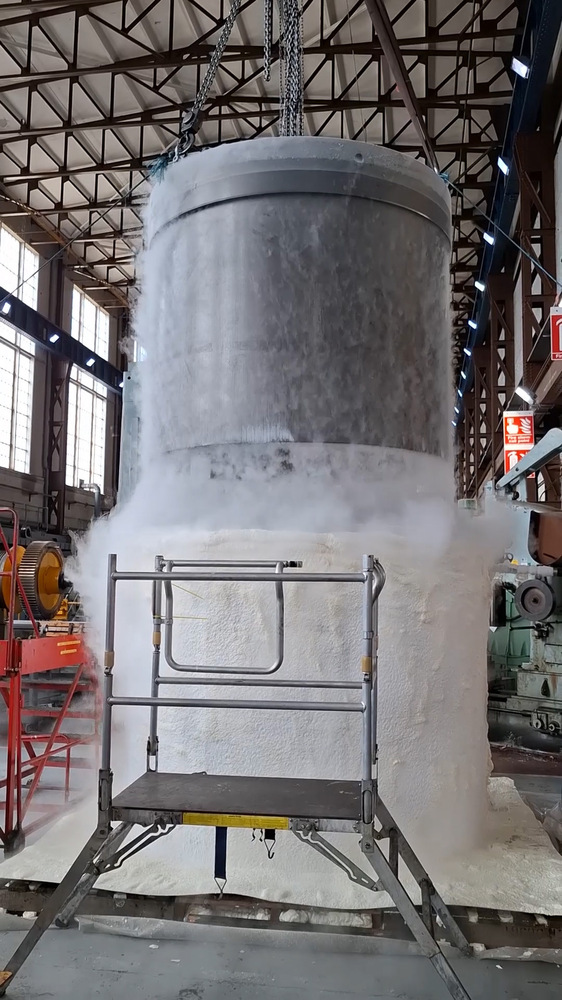
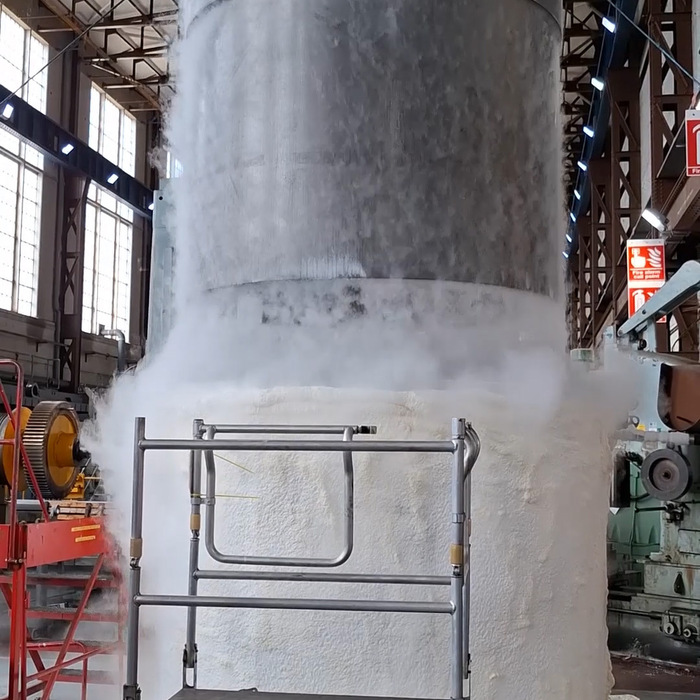
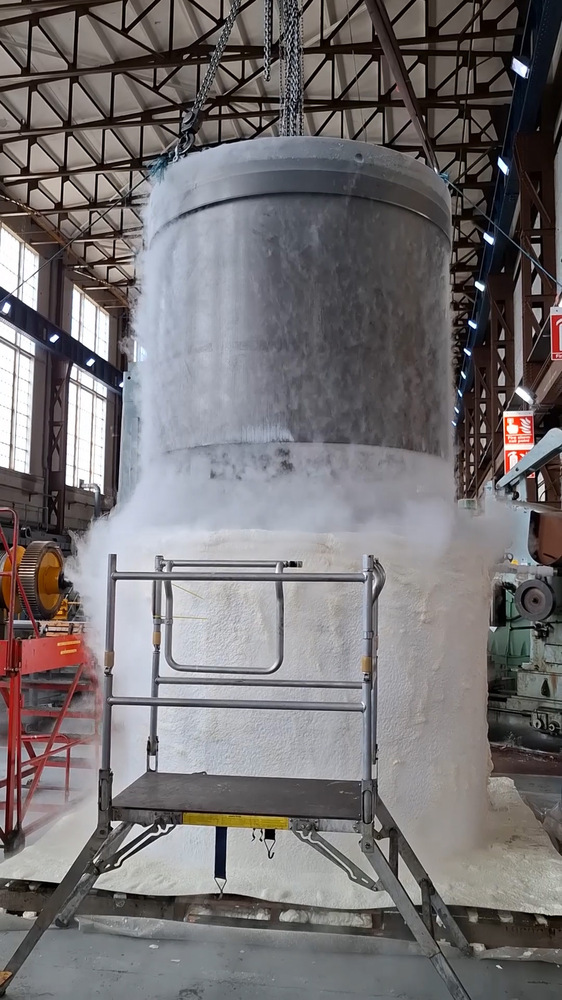
Large shrink fit Being lifted out of the liquid nitrogen vessel
The inner component to be fitted is submerged in liquid nitrogen contained in an insulated shrink fit pot. Once the maximum shrinkage has been reached the component can be carefully removed and inserted into position. After assembly the inner component warms up and expands to form a tight distortion free interference fit.
Areas of Application
Bishop Shrink Fitting has experience of operating in the following sectors:
- Aerospace
- Automotive
- Motorsport
- Marine Engineering
- Power Stations
- Ports
- Water industry
- Nuclear
- Ship building
- Mining
- Steel manufacturing
- Construction
- Off shore
- Food industry
- Process industry
- Medical
- Steam railways
- Modern art
- Quarries
- Cement Industry
Shrink Fitting - what material and size?
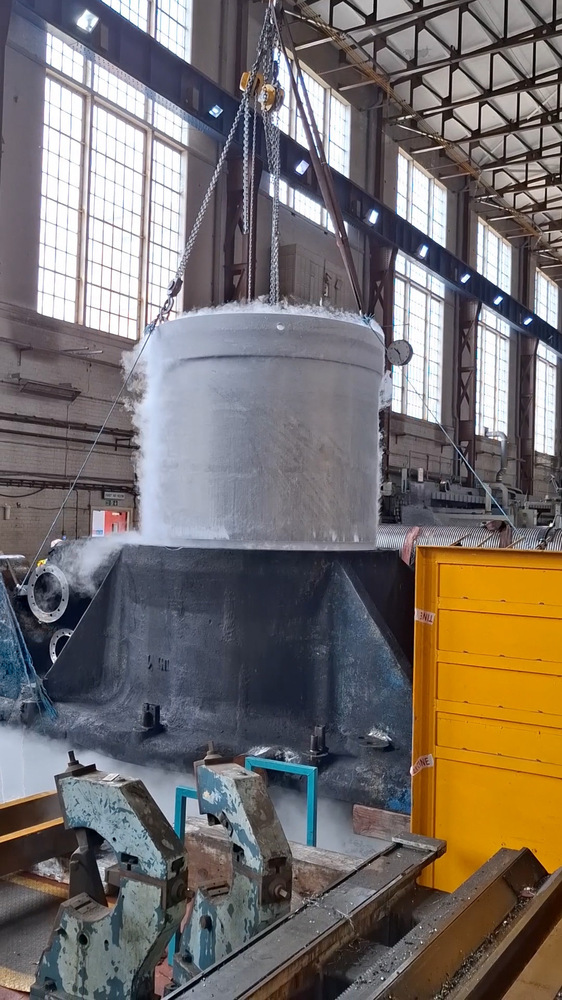
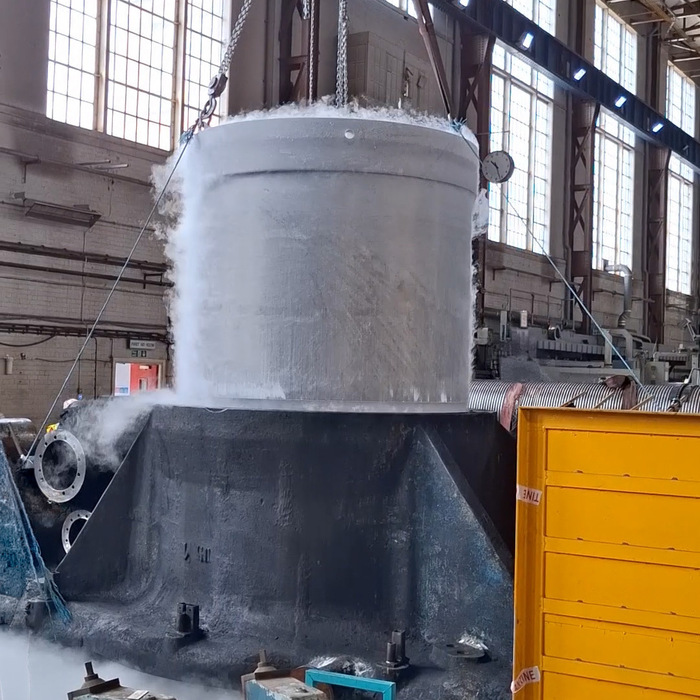
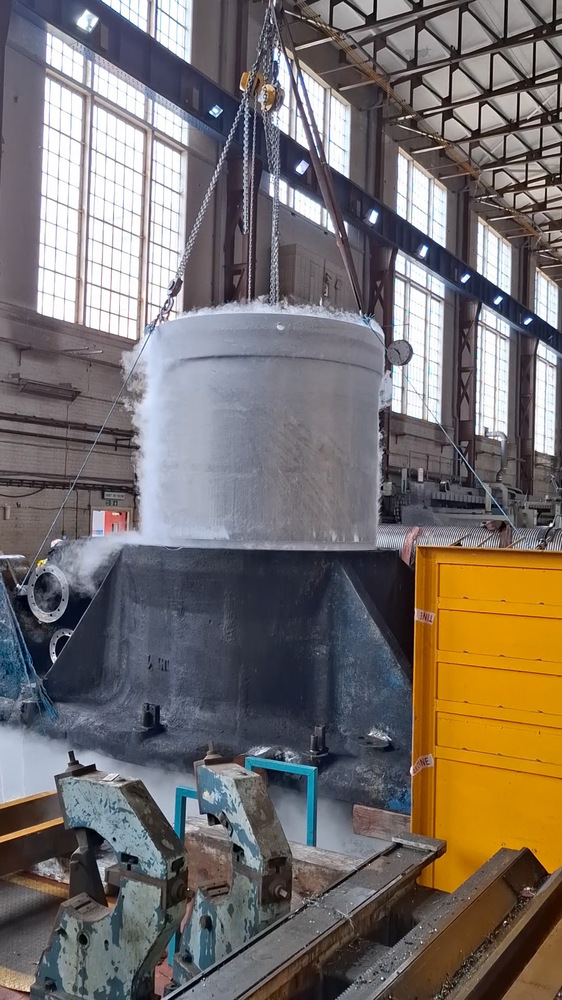
Large shrink fit being inserted
We can undertake shrink fitting for components from 10 grams to 10 tonnes on a variety of materials:
- Aluminium
- Brass
- Phosphorus Bronze
- Cast Iron
- Carbon Steel
- Chrome Moly
- Composite
- Copper
- Magnesium
- Monel
- Nickel
- Stainless Steel
Common Shrink Fitting applications:
- Pins
- Bushes
- Bearings
- Sleeves
- Liners
- Shafts
- Valve Seats
- Buttons
- Trunnions
- Pads
- Journals
- Grinding Mill Table
Shrink Fitting in our Workshops
We can undertake the shrink fitting of smaller components at our workshops in Biggin Hill or Stockton-On-Tees, and for everything else our engineers will visit your site to carry out the shrink fitting or shrink removal work. Significant cost savings can be made by using low cost commercial couriers for delivery and collection of components.
Shrink Removal
Shrink removal offers the possibility of removing a component by cooling with liquid nitrogen which will allow the component to shrink sufficiently to allow removal. This is the opposite to shrink fitting and can be applied to all of the same areas and materials as shrink fitting.
Liquid Nitrogen Delivery Service
Some clients may have in house skills for shrink fitting/production requirements and can comply with both H&S legislation and HSE handling /storage of liquid nitrogen. We offer liquid nitrogen deliveries from small quantities up to 1000 litres. We can also hire out pressurised vessels, insulated shrink fit pots, oxygen monitors and air movers if required.
Technical Information
The following table shows the maximum shrinkage obtainable by cooling a material in liquid nitrogen (-196°C) from ambient room temperature.
| Material |
Maximum shrinkage
(Thousands of an inch per inch diameter) |
Maximum shrinkage
(Microns) |
|---|---|---|
| Aluminium | 3.8 | 96.52 |
| Brass | 3.4 | 86.36 |
| Bronze | 3.5 | 88.90 |
| Cast Iron | 1.8 | 45.72 |
| Copper | 3.0 | 76.20 |
| Magnesium | 4.5 | 114.30 |
| Monel | 2.7 | 68.58 |
| Nickel | 2.1 | 53.34 |
| Stainless Steel | 2.0 | 50.80 |
| Steel | 1.9 | 48.26 |
| Zinc | 4.1 | 104.14 |
More Images
Roll over the images for more.